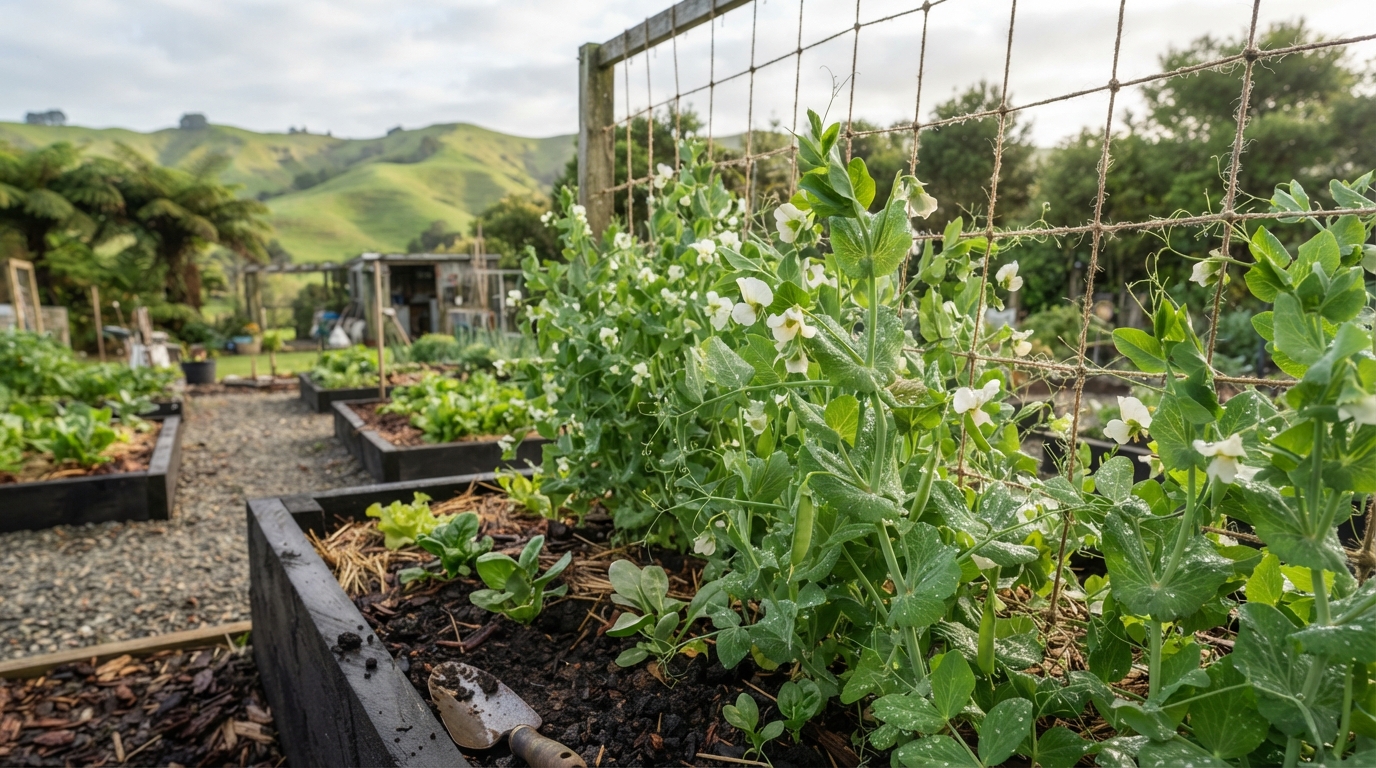
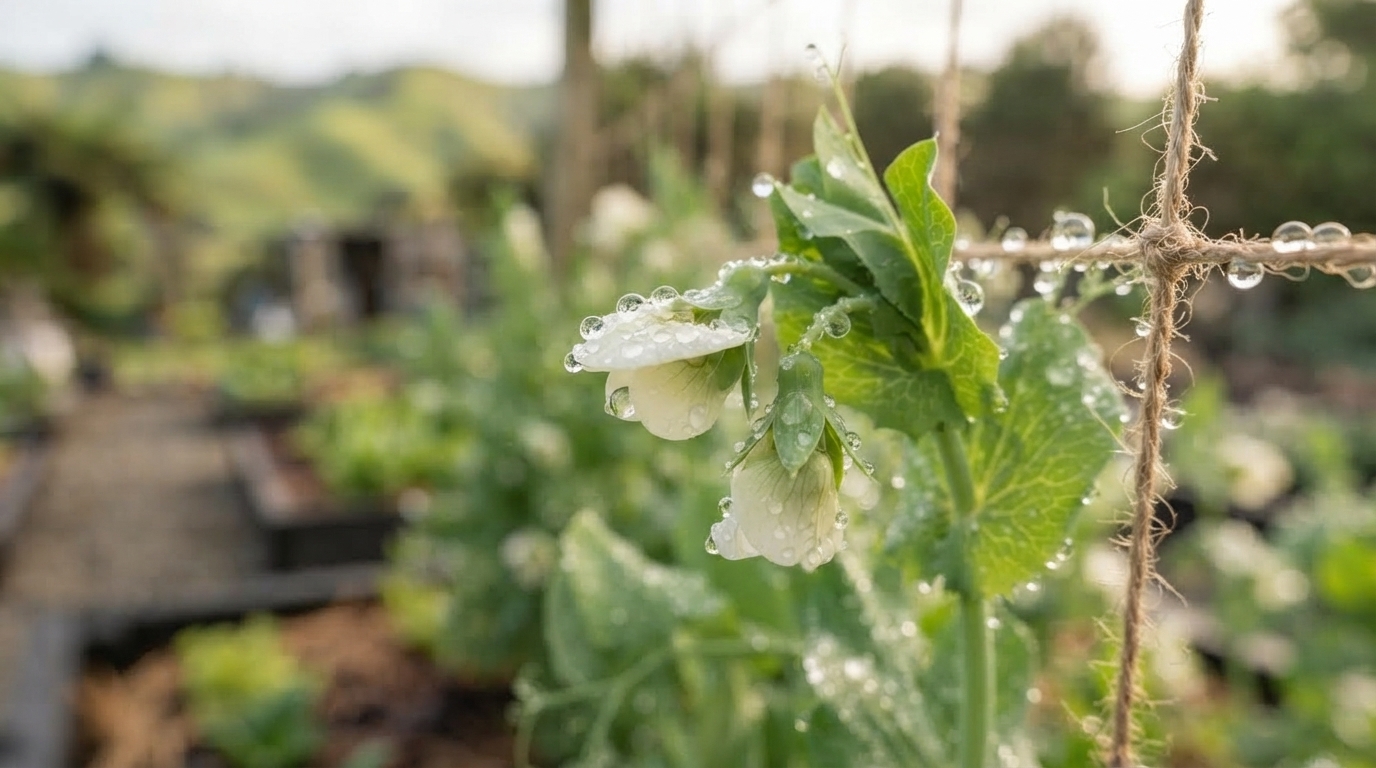
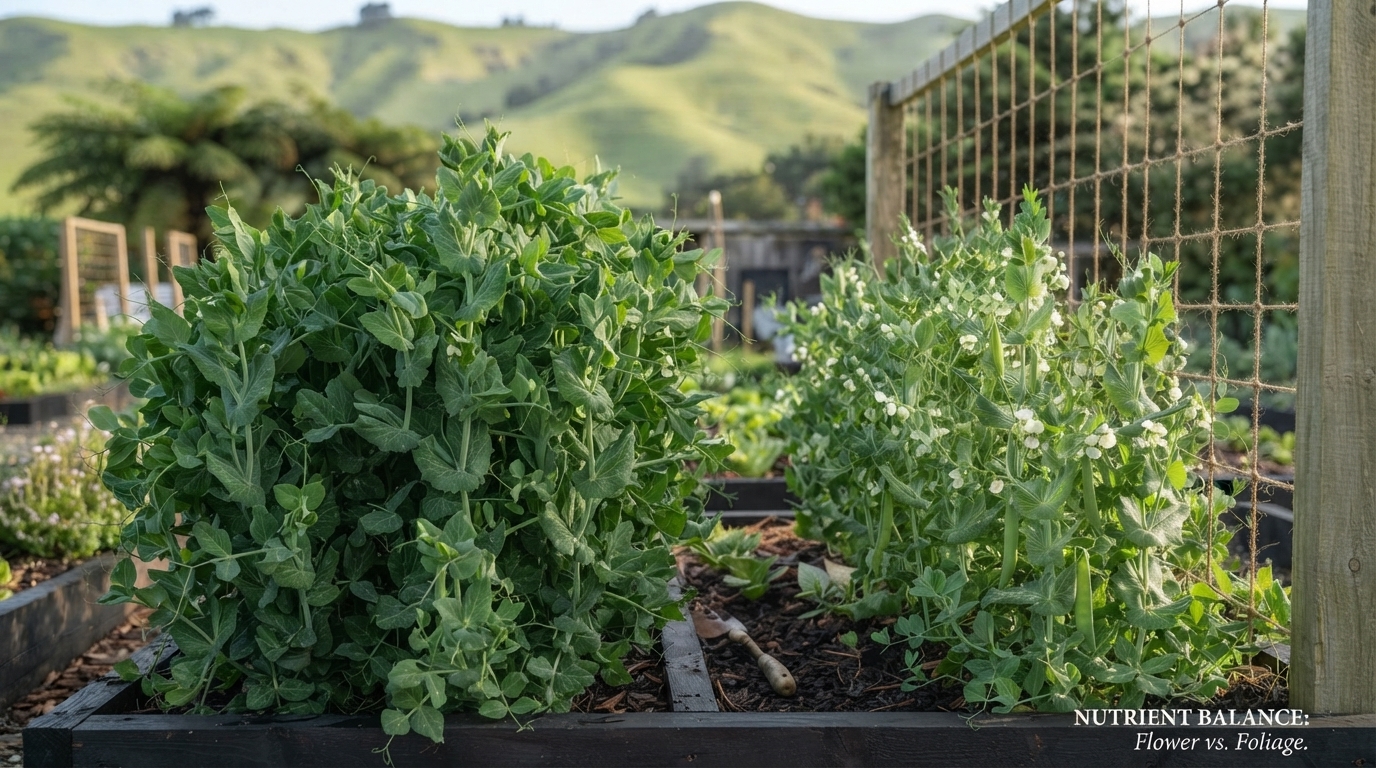
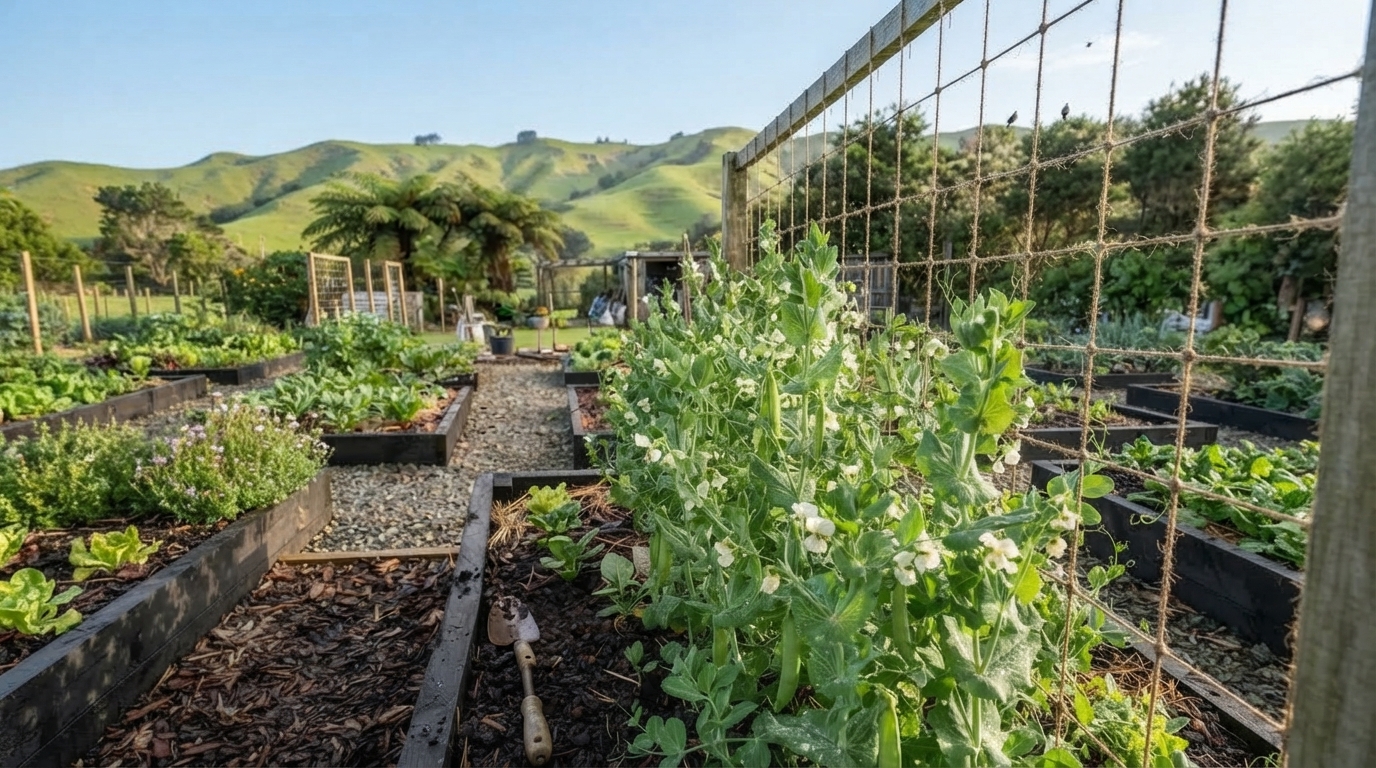
Peas not flowering in a New Zealand garden is almost always down to one of four culprits: too much nitrogen, too little sun, temperature stress, or planting at the wrong time of year. Peas (Pisum sativum) are cool-season legumes, and lush, leafy growth with no blooms is the classic sign of a nitrogen-rich soil pushing foliage instead of flowers. Fix the underlying cause and most pea vines will burst into bloom within one to two weeks.
Peas need a minimum of six hours of direct sun daily — shaded plants stay vegetative.
Extreme heat above 25°C or unexpected frost can both suppress flower set.
Sowing outside the correct window on the vegetable planting calendar leads to poor flowering and premature dieback.
Stressed or waterlogged roots reduce the plant’s energy for blooming.
Understanding Why Peas Won’t Flower
Peas are one of the easiest crops for beginners following any good spring gardening guide, but a healthy-looking vine with zero flowers is a common frustration for Kiwi gardeners from Kerikeri to Cromwell. The good news: non-flowering peas are a symptom, not a disease, and the cause is almost always fixable within a fortnight once identified.
Too Much Nitrogen in the Soil
Nitrogen overload is the single most common reason for pea plants that grow tall and green but refuse to bloom. Peas are legumes that fix their own nitrogen through root nodules formed with Rhizobium bacteria, so they need very little additional nitrogen fertiliser. Adding lawn food, fresh animal manure, or high-nitrogen vegetable mixes tips the balance toward leafy growth at the expense of flowers and pods.
Kiwi gardeners often notice this after enriching a new raised bed with too much fresh compost or manure before planting. If your vines are thick, dark green, and over waist height with no sign of buds, nitrogen excess is the likely cause. Switch to a low-nitrogen, higher-phosphorus and potassium feed such as Yates Thrive Natural Blood & Bone with Seaweed at planting, and hold off on any additional nitrogen-rich feeding once vines are established.
Insufficient Sunlight
Peas need a minimum of six hours of direct sun, and ideally full sun all day, to trigger flowering. Vines grown in the shade of a fence, hedge, or taller crop will put on plenty of foliage but produce few or no blooms because the plant simply doesn’t have the light energy to commit to reproduction. This is especially relevant in tight urban Auckland sections or shaded Wellington gullies where afternoon sun is limited.
Temperature Stress: Heat or Cold
Peas are a cool-season crop that thrives between 10°C and 20°C. Once daytime temperatures push past 25°C, especially in Northland, Hawke’s Bay, or inland Canterbury during a hot spell, flower buds can abort or fail to set entirely. Conversely, a late frost in frost-prone inland areas such as Central Otago or the Waikato high country can knock back flower buds just as they’re forming. Both extremes divert the plant’s energy into survival rather than blooming.
Wrong Timing on the Calendar
Sowing peas too late into early summer heat, or too early into cold, waterlogged winter soil, both suppress flowering. Following a properly sequenced vegetable planting calendar for your region keeps peas in their comfort zone from germination through to bloom.
Root Stress and Poor Drainage
Waterlogged, compacted, or drought-stressed roots reduce the plant’s ability to fund flower development. Peas dislike sitting in wet, heavy volcanic clay typical of parts of the Waikato and Bay of Plenty, and equally dislike drying out in free-draining sandy loam common on the Canterbury Plains.
How to Grow Peas Successfully in New Zealand
Getting the fundamentals right from sowing onward is the best defence against non-flowering vines. Here’s a full rundown on how to grow peas for a heavy, reliable bloom and harvest across New Zealand’s varied climates.
Choosing a Sunny, Well-Drained Site
Select a spot receiving at least six hours of direct sun. Peas tolerate a wide range of soils — from sandy loam to volcanic clay — provided drainage is good and pH sits between 6.0 and 7.5. Heavy clay soils in the Waikato or Taranaki benefit from added compost and gypsum to improve structure without adding nitrogen.
Soil Preparation
Loosen soil to 30cm depth and remove clods and stones.
Work in a light dressing of blood and bone or aged sheep pellets rather than fresh manure.
Avoid nitrogen-heavy fertilisers such as urea or general lawn feed.
Add lime if soil pH is below 6.0, particularly common in acidic peat soils around the Hauraki Plains.
Sowing and Spacing
Sow seed 3–5cm deep and 5–8cm apart in rows spaced 45–60cm apart, or scatter-sow in a wide raised bed. Climbing varieties such as ‘Telephone’ or snow peas need a trellis or netting from the outset; dwarf varieties like ‘Earlicrop Massey’ can be grown without support. Thin seedlings if overcrowded to improve airflow and reduce powdery mildew risk.
Watering and Mulching
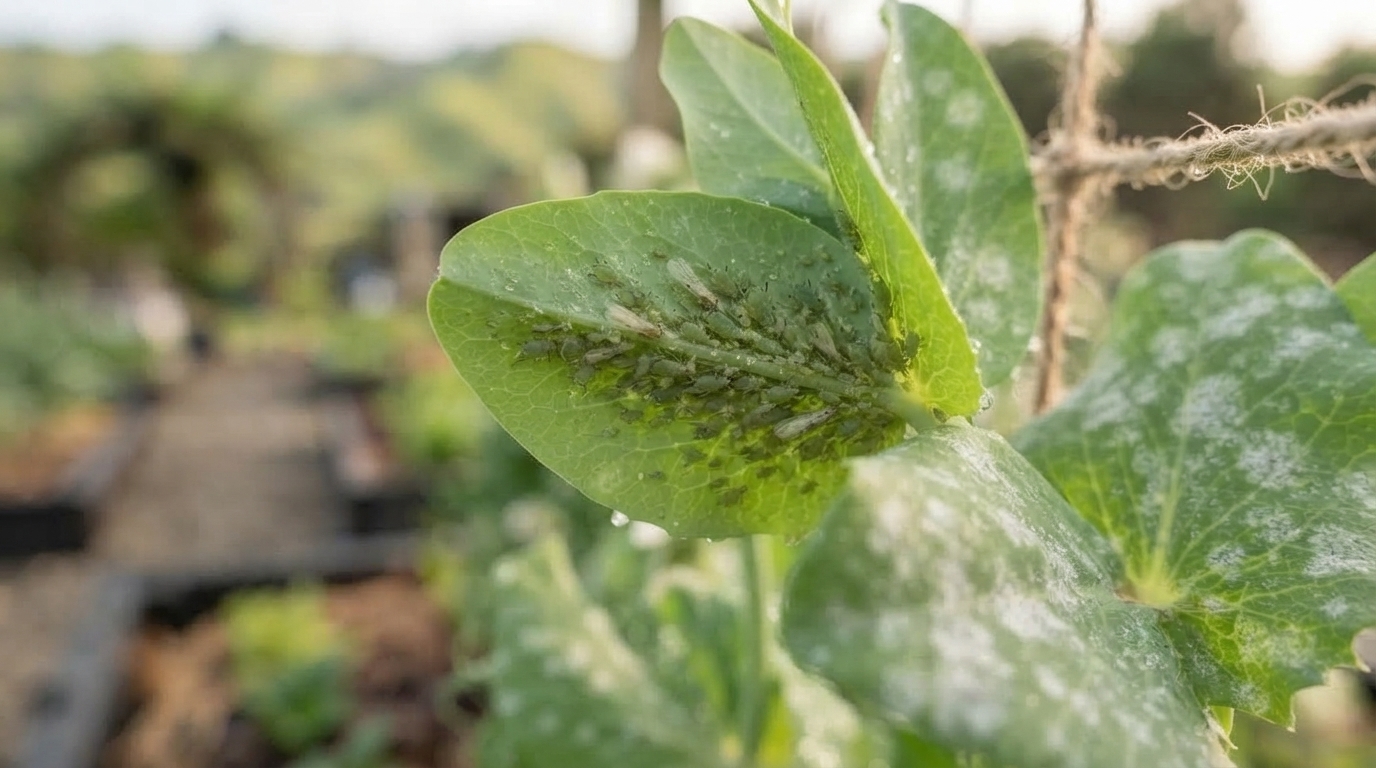
Keep soil evenly moist, especially once flowering begins — irregular watering during bud formation is a frequent cause of flower drop. Apply a 3–5cm layer of pea straw or lucerne mulch to conserve moisture, suppress weeds, and moderate soil temperature. Avoid overhead watering in humid Bay of Plenty conditions, which encourages powdery mildew.
Feeding for Flowers, Not Foliage
Once flower buds appear, switch to a potassium-rich feed such as Yates Thrive Flower & Fruit food or a seaweed/kelp tea rather than continuing with nitrogen-based fertiliser. This encourages the plant to commit energy to blooms and pod set rather than further leaf growth.
NZ Seasonal Timing: When to Sow Peas
Following a reliable spring gardening guide for timing is essential, because peas sown outside their comfort window rarely flower well. In the Southern Hemisphere, the ideal windows are early spring and again in early autumn, avoiding the heat of summer.
As part of any complete vegetable planting calendar, peas are best treated as a two-window crop — spring for an early summer harvest, and again in late summer for an autumn crop — while avoiding the mid-summer heat that suppresses flowering almost everywhere except the coolest alpine districts.
Microclimates and Regional Variation
New Zealand’s growing conditions vary enormously over short distances. In subtropical Northland and Auckland, peas can be sown almost year-round outside the hottest months, but high humidity increases the risk of powdery mildew and reduced flowering in still, damp air. In temperate Waikato and Bay of Plenty, volcanic clay retains moisture well but can become compacted and poorly drained after heavy rain, stressing roots and delaying blooms. In frost-prone inland Canterbury and Central Otago, a late spring frost can nip young flower buds, so many local growers hold off direct sowing until the soil has reliably warmed above 7°C, or start seedlings undercover and transplant once frost risk has passed.
Common NZ Pests and Diseases Affecting Pea Flowering
Beyond nutrition and timing, several pests and diseases common across Aotearoa can indirectly suppress pea flowering by stressing the plant or damaging buds.
Hose off, encourage ladybirds, use insecticidal soap
Passionvine hopper
Sap-sucking stress on soft new growth
Yates Mavrik or pyrethrum-based spray if numbers are high
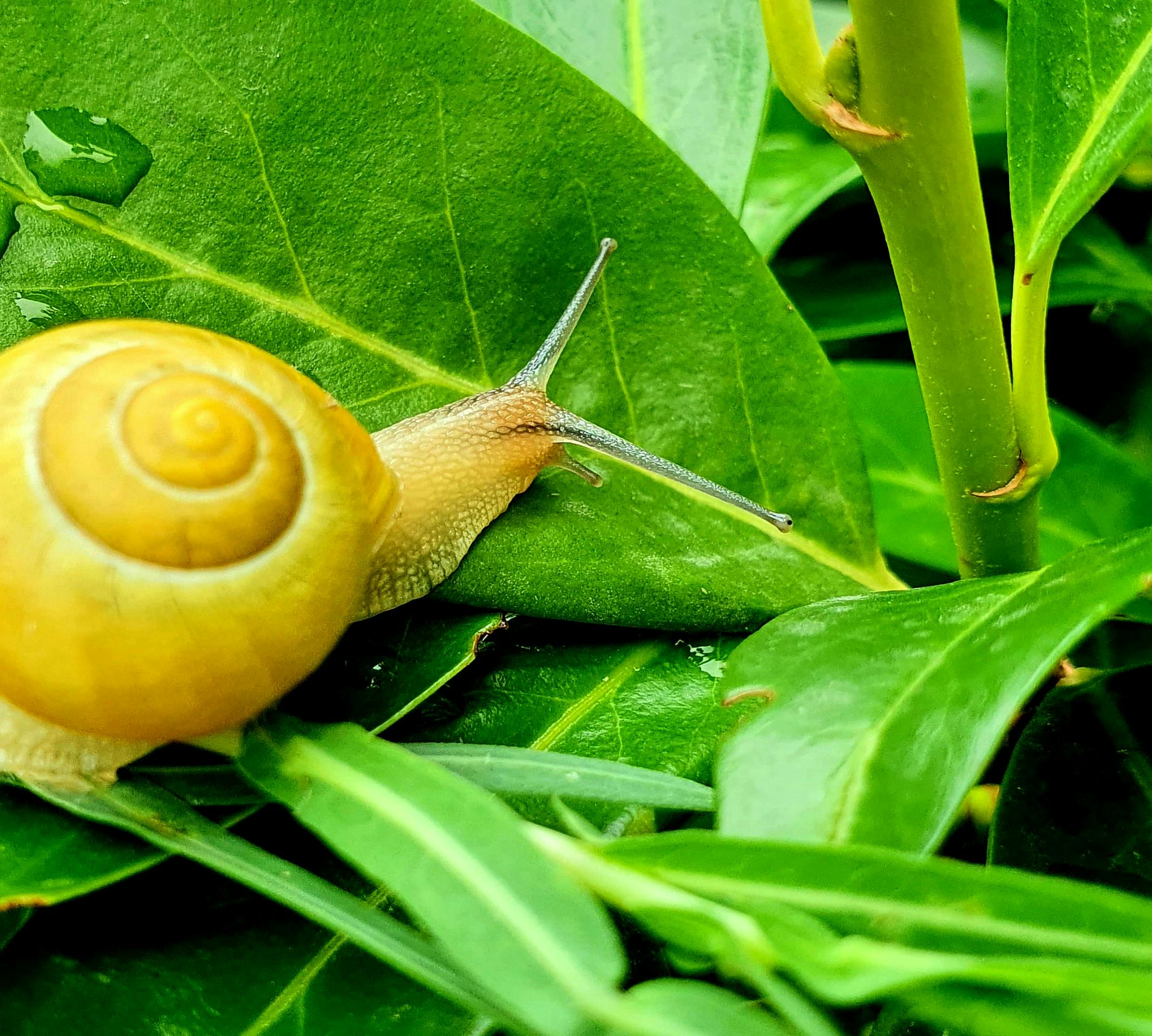
Slugs and snails
Damage young seedlings before flowering stage
Baited traps, beer traps, or slug bait pellets around seedlings
Pea weevil
Attacks pods after flowering, but heavy infestation stresses whole plant
Rotate crops, remove old plant debris promptly
According to the Yates New Zealand growing guide for peas, consistent watering through warmer weather and a sunny, well-drained site are the two non-negotiables for reliable flowering and pod set.
Step-by-Step: Fixing Non-Flowering Peas Right Now
Check sun exposure — relocate containers or thin overhanging growth if vines are shaded more than a few hours a day.
Stop all nitrogen feeding immediately; switch to a potassium-rich or seaweed-based tonic.
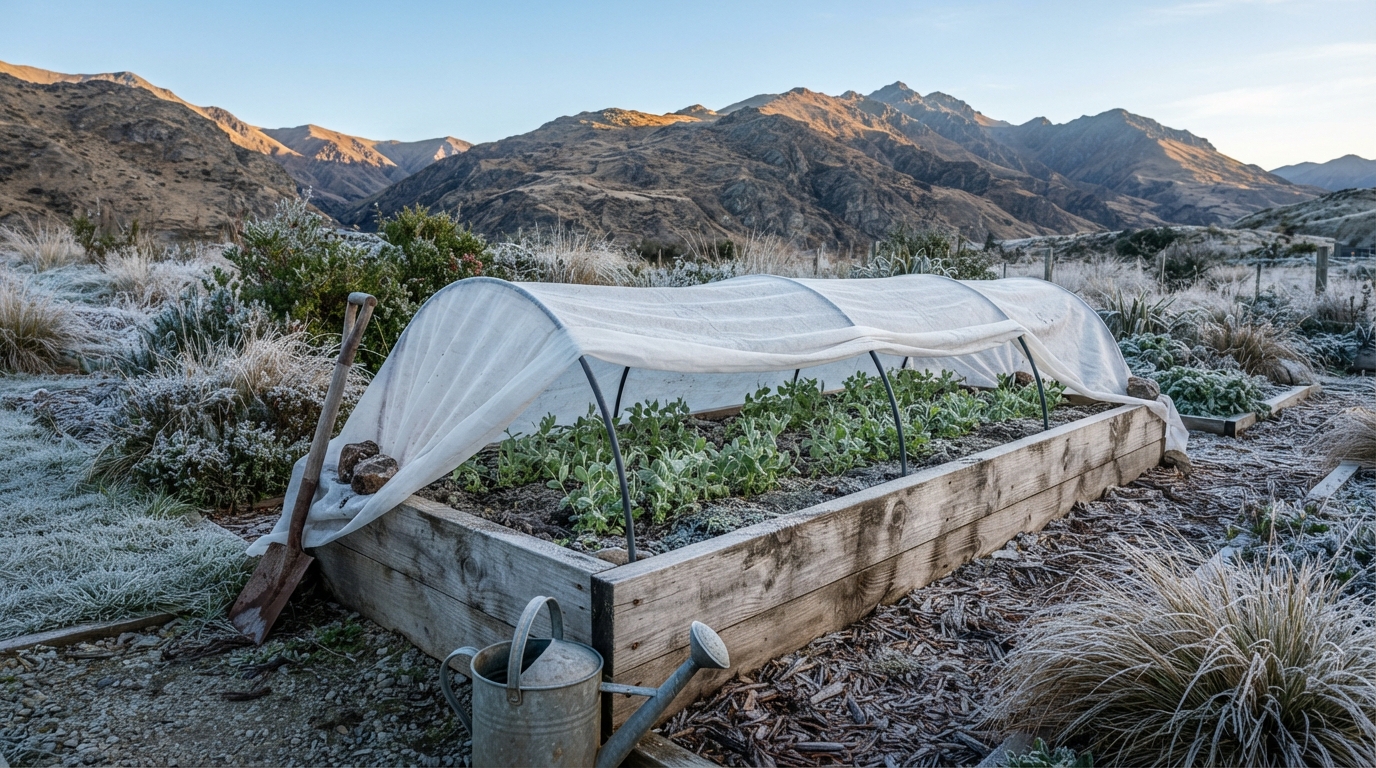
Inspect for heat or frost stress — provide shade cloth in a heatwave or frost cloth ahead of a cold snap.
Check soil moisture — water deeply if dry, and improve drainage if waterlogged.
Inspect for pests such as aphids or powdery mildew and treat promptly.
Be patient — vines often flower within 10–14 days once the stress factor is corrected.
Key Takeaways
All-leaf, no-flower peas usually signal too much nitrogen in the soil.
Full sun (six-plus hours) is essential for reliable flowering.
Sow within the correct spring or late-summer window on your regional vegetable planting calendar.
Switch to potassium-rich feeding once buds appear rather than continuing nitrogen fertiliser.
Frost cloth and shade cloth both have a place depending on your region’s extremes.
Frequently Asked Questions
Why are my pea plants tall and leafy but have no flowers?
This is almost always caused by excess nitrogen in the soil, often from fresh manure or lawn fertiliser. Peas fix their own nitrogen and need very little extra. Stop nitrogen feeding, switch to a potassium-rich tonic like seaweed tea, and flowering should begin within one to two weeks.
What is the best time to plant peas in New Zealand?
Most regions favour sowing in early spring (August–October) for a summer harvest, and again in late summer (February–March) for an autumn crop. Avoid sowing through the peak of summer heat, as high temperatures suppress flowering across nearly all of New Zealand.
Can heat stop my peas from flowering?
Yes. Once daytime temperatures exceed roughly 25°C, pea flower buds can abort or fail to open properly. This is common in Northland, Hawke’s Bay, and inland areas during summer. Provide afternoon shade cloth and consistent watering to reduce heat stress during hot spells.
Do peas need full sun to flower?
Yes, peas need a minimum of six hours of direct sunlight daily to flower well. Shaded plants will grow plenty of foliage but produce few or no blooms, as they lack the light energy needed to shift into reproductive growth.
How do I protect flowering peas from frost in Central Otago or Canterbury?
Cover young plants with frost cloth on cold nights, especially in early spring when late frosts are common in frost-prone inland areas. Delaying sowing until soil temperatures reliably sit above 7°C also reduces the risk of frost damaging emerging flower buds.
Should I fertilise peas once they start flowering?
Yes, but switch away from nitrogen-based fertiliser and use a potassium and phosphorus-rich feed, such as a flower and fruit food or seaweed/kelp tea. This supports flower and pod development without pushing further leafy growth.
Why do my peas have flowers but no pods forming?
This usually points to poor pollination, often from still air, extreme heat, or inconsistent watering during flowering. Gently shaking trellised vines on a still day, ensuring good airflow, and watering consistently through the flowering stage all improve pod set.
Conclusion
Peas not flowering is a fixable problem once you identify whether the cause is excess nitrogen, insufficient sun, temperature stress, or poor timing. By following the sowing windows in your regional vegetable planting calendar, feeding correctly for bloom rather than foliage, and protecting plants from frost and heat extremes, most Kiwi gardeners can turn a leafy, flowerless vine into a productive one within a fortnight. Treat the whenua well, keep an eye on the season ahead, and your peas will reward you with a generous harvest from your own backyard plot.
We use cookies to improve your experience, analyze traffic, and display personalized ads.
By clicking "Accept", you consent to the use of cookies in accordance with our Privacy Policy.