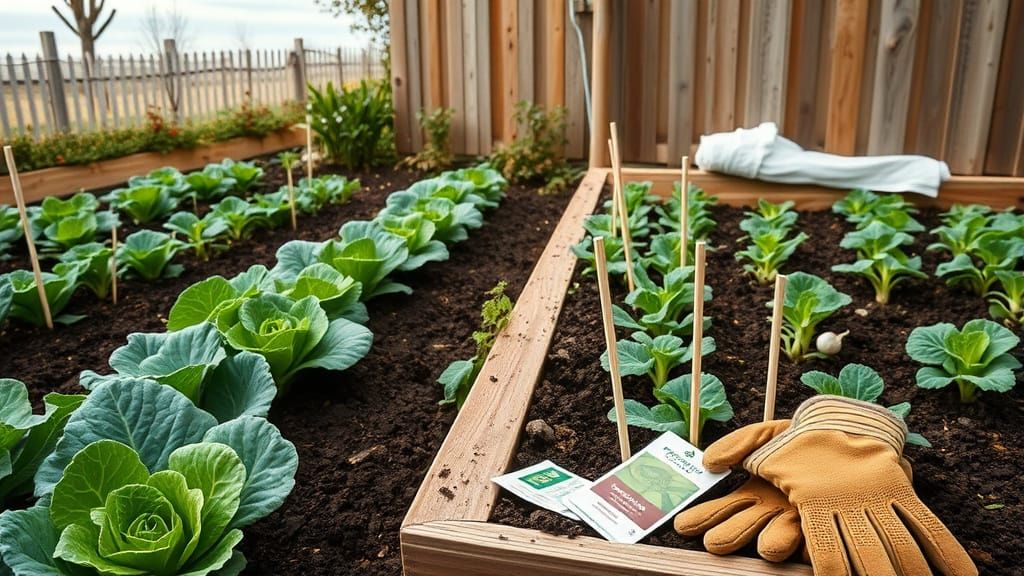
How to Mulch Your Garden in Winter: The Ultimate Guide for NZ Gardens
Winter in New Zealand can be tough on our gardens. From biting frosts in the South Island to heavy rains in the North, protecting your soil and plants is a crucial seasonal task. Mulching in winter isn’t just about keeping things neat; it’s about providing a protective blanket that regulates temperature, locks in moisture, and sets up your soil biology for an explosive spring. As an urban gardener, I always tell my friends: the secret to a thriving spring garden is the work you do in winter. Let’s dive into how to mulch your garden in winter effectively for the NZ climate.
Mulching your garden in winter involves applying a protective 5-10cm layer of organic material—like pea straw, bark, or compost—over the soil to insulate plant roots, prevent frost damage, and suppress slow-growing winter weeds.
Timing: Apply before the first hard frosts, usually late autumn or early winter, while the soil still holds some residual warmth.
Best Materials: Bark for ornamentals and trees; pea straw or lucerne for vegetable beds; compost for general soil improvement.
Depth: Aim for 5-10cm for optimal insulation and weed suppression (less for small seedlings).
Key Rule: Always leave a 5cm gap around plant stems and tree trunks to prevent collar rot.
Why Winter Mulch Matters in New Zealand
New Zealand’s “four seasons in one day” climate means our soil experiences significant temperature fluctuations. Winter mulching provides several crucial benefits:
Frost Protection: Mulch acts as an insulating blanket. By keeping the soil temperature more consistent, it protects tender roots from freezing and thawing cycles.
Weed Suppression: Winter weeds might grow slowly, but they still grow. A thick mulch layer blocks the light they need to germinate, saving you hours of weeding in the cold.
Moisture Management: While it seems counterintuitive in a wet NZ winter, mulch prevents the soil from becoming waterlogged by reducing the impact of heavy rain and preventing surface erosion and nutrient leaching. Conversely, on dry winter days, it stops the wind from stripping moisture away.
Soil Building: Organic mulches slowly break down, adding vital organic matter and nutrients to the soil, feeding earthworms, and improving soil structure.
Choosing the Right Mulch for the Job
Not all mulches are created equal. The type you choose depends heavily on what you are trying to protect in your garden.
Pea Straw and Lucerne (Best for Veggie Gardens)
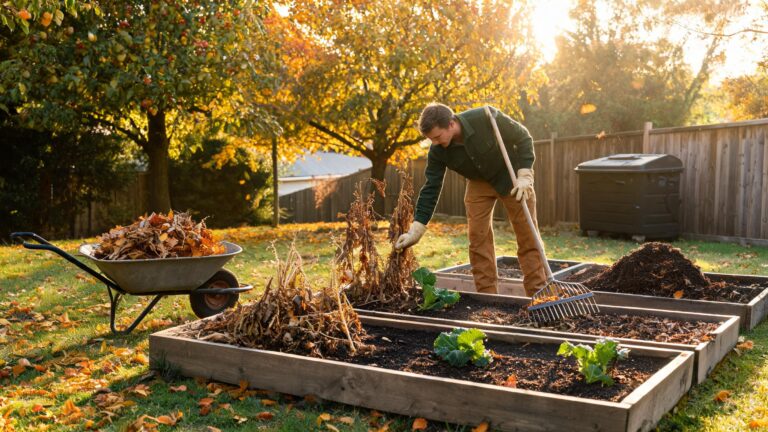
These are fantastic for vegetable beds. They are light, insulate well, and break down relatively quickly, adding a boost of nitrogen back into the soil. Gardeners often notice a significant improvement in soil friability after a winter under pea straw. Note: Use these as a surface layer, don’t dig them in un-composted.
Bark and Wood Chips (Best for Trees and Ornamentals)
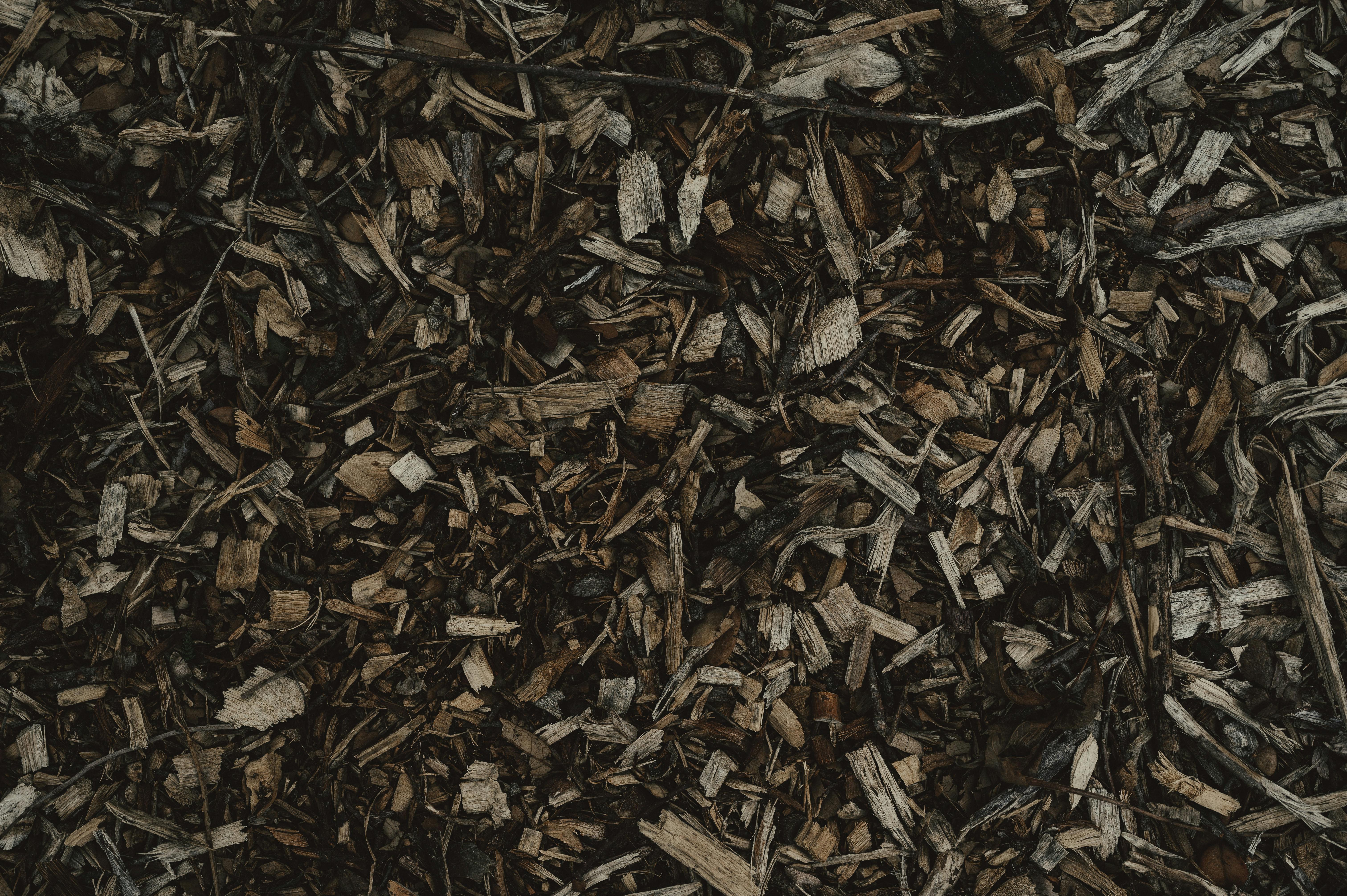
Rough bark or wood chip mulch is ideal for ornamental flower beds, shrubs, and around fruit trees (like citrus). It breaks down slowly, providing long-lasting coverage and a tidy appearance. It’s excellent for regulating soil temperature around established roots.
Compost (Best for Soil Enrichment)
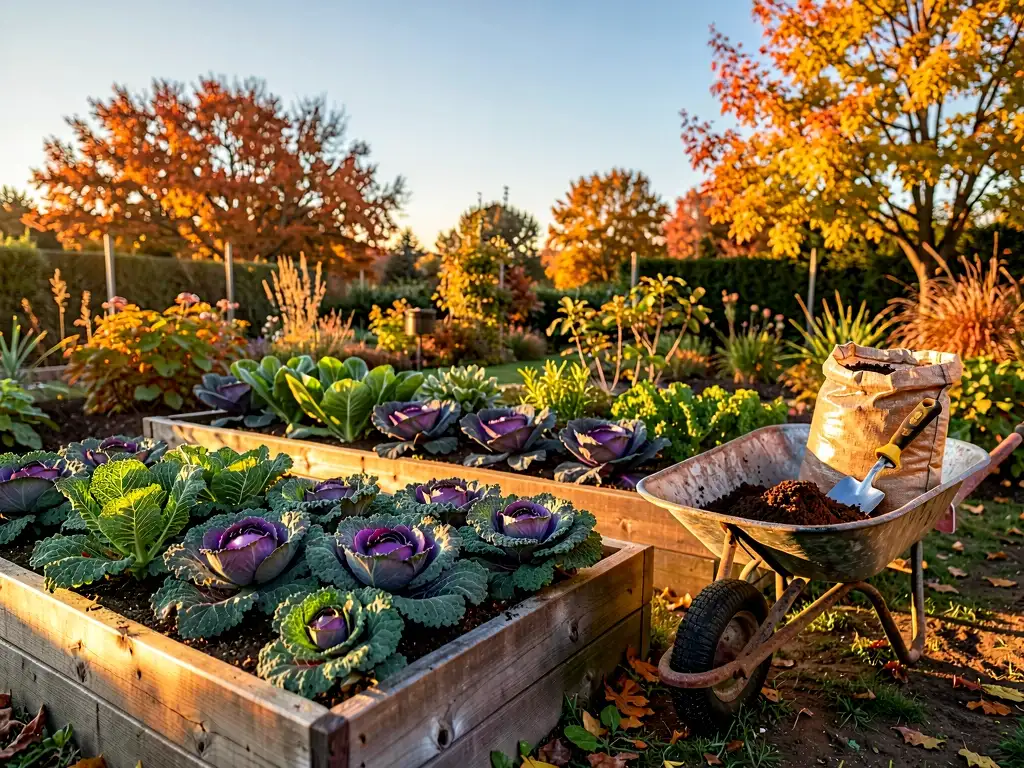
While technically a soil amendment, a thick layer of compost can act as a mulch. It provides immediate nutrients and improves soil structure. It’s perfect for prepping empty garden beds for spring planting or top-dressing hungry winter crops like celery.
Autumn Leaves
If you have deciduous trees, don’t throw those leaves away! Rotted leaves (leaf mould) make a wonderful, free mulch that mimics the natural forest floor.
What to Avoid
Thick, wet layers of fresh grass clippings: These can mat together, turning slimy and anaerobic, which promotes collar rot and fungal problems.
Very deep mulch on heavy clay: If your soil is already heavy and wet, an overly thick mulch (more than 10cm) can lock the cold and damp in, preventing the soil from breathing.
How to Apply Winter Mulch: Step-by-Step
Follow these steps for optimal winter protection.
Start Clean: Remove any existing weeds, dead plant material, and debris from the beds. You don’t want to bury weed seeds under a cozy blanket.
Hydrate: Ensure the soil is adequately moist before mulching. If it’s been unusually dry, water the beds deeply first. Mulching over dry soil will just lock the dryness in.
Apply the Mulch: Spread your chosen material evenly across the soil surface.
Check Your Depth:
For established trees, shrubs, and ornamental beds, aim for 5-10cm.
For vegetable beds or around smaller plants, 5-7cm is sufficient.
Around young winter seedlings, use a very light layer to avoid creating a cold, wet microclimate.
The “Doughnut” Rule: This is critical. Never mound mulch up against the stem of a plant or the trunk of a tree. Always leave a gap of at least 5cm. Trapped moisture against the stem causes collar rot, which can quickly kill the plant.
Regional Considerations in NZ
Deep South / Alpine Regions: In areas with heavy, prolonged frosts, apply your mulch in late autumn while the soil is still relatively warm. A thicker layer (up to 10cm) of straw or bark is essential for insulation. For highly sensitive perennials, a heavier “blanket” of mulch can mean the difference between life and death.
Northland / Mild Coastal Areas: Here, the focus is more on weed suppression and preventing nutrient leaching from heavy winter rain. A 5-7cm layer of compost or bark is often sufficient. Ensure your soil drains well, as overly thick mulch in wet, mild areas can encourage fungal diseases.
Comparing Winter Mulch Options
Mulch Type
Best For
Pros
Cons
Pea Straw / Lucerne
Veggie beds, annuals
Adds nitrogen, light, insulates well
Breaks down fast, can blow away in high wind
Bark / Wood Chip
Trees, shrubs, ornamentals
Long-lasting, looks tidy, excellent weed barrier
Takes a long time to break down, can temporarily tie up nitrogen if mixed into soil
Compost
Empty beds, heavy feeders
High nutrient value, improves soil structure fast
Weeds can still grow in it, needs to be thick to insulate
Leaf Mould
Woodland plants, general beds
Free, mimics natural environment, great for soil life
Takes time to make, can blow away if not partially decomposed
Frequently Asked Questions
When exactly should I put winter mulch down?
The ideal time is late autumn or early winter (May to June), just before the heavy frosts hit. You want to trap the last of the autumn warmth in the soil before it freezes. If you missed this window, it’s never too late, but you might be insulating cold soil.
Should I remove mulch in the spring?
In early spring, when you want the soil to warm up for planting, it can be beneficial to pull the mulch back slightly to let the sun hit the soil surface directly. Once the soil has warmed, you can push it back or dig organic mulches (like compost) in.
Does mulch attract pests in winter?
Thick mulch can sometimes provide a hiding place for slugs and snails during wet weather. Keep an eye out and use natural controls if they become a problem. Keeping mulch away from the plant stems helps mitigate this.
Can I just use black plastic instead of organic mulch?
While weed mat or black plastic suppresses weeds and warms the soil slightly, it doesn’t add organic matter, feed the soil biology, or allow the soil to breathe as well as organic mulches. If you use weed mat, it’s best covered with a layer of bark for aesthetics and extra insulation.
How much mulch do I need to buy?
A good rule of thumb is that a 40L bag of pea straw usually puffs up to cover about 1.5 to 2 square meters at a 5cm depth. For bark, calculate the cubic meters of your bed (length x width x depth of mulch) to order bulk delivery.
Conclusion
Mastering how to mulch your garden in winter is a cornerstone of successful New Zealand gardening. By choosing the right material—whether it’s nitrogen-rich pea straw for the veggies or robust bark for the fruit trees—and applying it with that crucial gap around the stems, you are actively protecting your plants from frost and investing in the long-term health of your soil. Don’t wait until the ground is frozen solid; get out there and tuck your garden in for the winter.
We use cookies to improve your experience, analyze traffic, and display personalized ads.
By clicking "Accept", you consent to the use of cookies in accordance with our Privacy Policy.